Learning Outcomes:
i. Define altruism and differentiate it from other cooperative behaviors.
ii. Explore the organization and remarkable social structure of the honeybee colony.
iii. Understand how individual honeybees exhibit altruistic behaviors for the benefit of the colony.
iv. Appreciate the complex interplay between selflessness and survival in the honeybee society.
Introduction:
Imagine a world where individuals dedicate their lives not to themselves, but to the greater good. Where sacrifice is not a burden, but a badge of honor. This is the realm of altruism, a fascinating phenomenon where organisms act in ways that benefit others, even at a cost to themselves. In this lesson, we'll embark on a journey into the buzzing hive of the honeybee, a society teeming with examples of altruism and understanding the remarkable ways these tiny creatures prioritize the collective over the individual.
i. The Buzz on Bees: A Society Built on Cooperation
A honeybee colony is more than just a swarm of buzzing insects; it's a tightly-knit society with a complex social structure. The queen, the sole reproductive female, lays thousands of eggs, while worker bees, all female and sterile, perform vital tasks like foraging for food, tending to larvae, and defending the hive. Drones, the male bees, contribute only to reproduction and are eventually driven out of the colony.
ii. The Hive Mind: A Symphony of Selflessness
The altruistic nature of honeybees shines through in their daily lives:
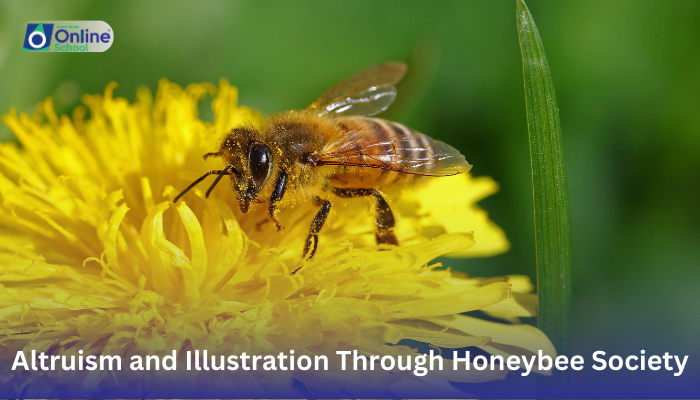
Foraging: Worker bees tirelessly search for nectar and pollen, often venturing far from the hive, risking their own safety to ensure the colony's sustenance.
Larval Care: Bees readily share regurgitated food with developing larvae, prioritizing their growth and survival even when facing hunger themselves.
Hive Maintenance: Cleaning, building wax combs, and defending the hive are collective tasks, requiring every bee to contribute their skills for the common good.
Temperature Regulation: Worker bees huddle together to maintain optimal temperature for the brood, sacrificing individual comfort for the well-being of the young.
iii. Beyond Survival: The Paradox of Altruism
While altruism seems counterintuitive, it holds the key to the honeybee's success. By prioritizing the colony, individual bees increase the chances of their genes being passed on. The queen lays thousands of eggs, ensuring the continuity of the lineage, while the colony's resilience and ability to gather resources maximize the survival of all members.
iv. The Delicate Dance: Altruism and Self-Preservation
Honeybee altruism isn't absolute. Worker bees balance selflessness with self-preservation. They consume enough food to stay alive, engage in risk-avoidance behaviors, and even expel drones when their role is no longer needed. This delicate balance ensures the colony's long-term survival while allowing for individual adaptations.
The honeybee's altruistic society reminds us that cooperation and selflessness can be powerful driving forces for success. By sacrificing individual needs for the collective good, honeybees have built a thriving society, a testament to the power of altruism and the intricate dance between self and other in the grand theater of life. So, the next time you hear the buzzing of bees or see their intricate hive, remember that you are witnessing a living example of altruism, a reminder that sometimes, the greatest reward lies not in self-gain, but in the collective well-being of the community.
